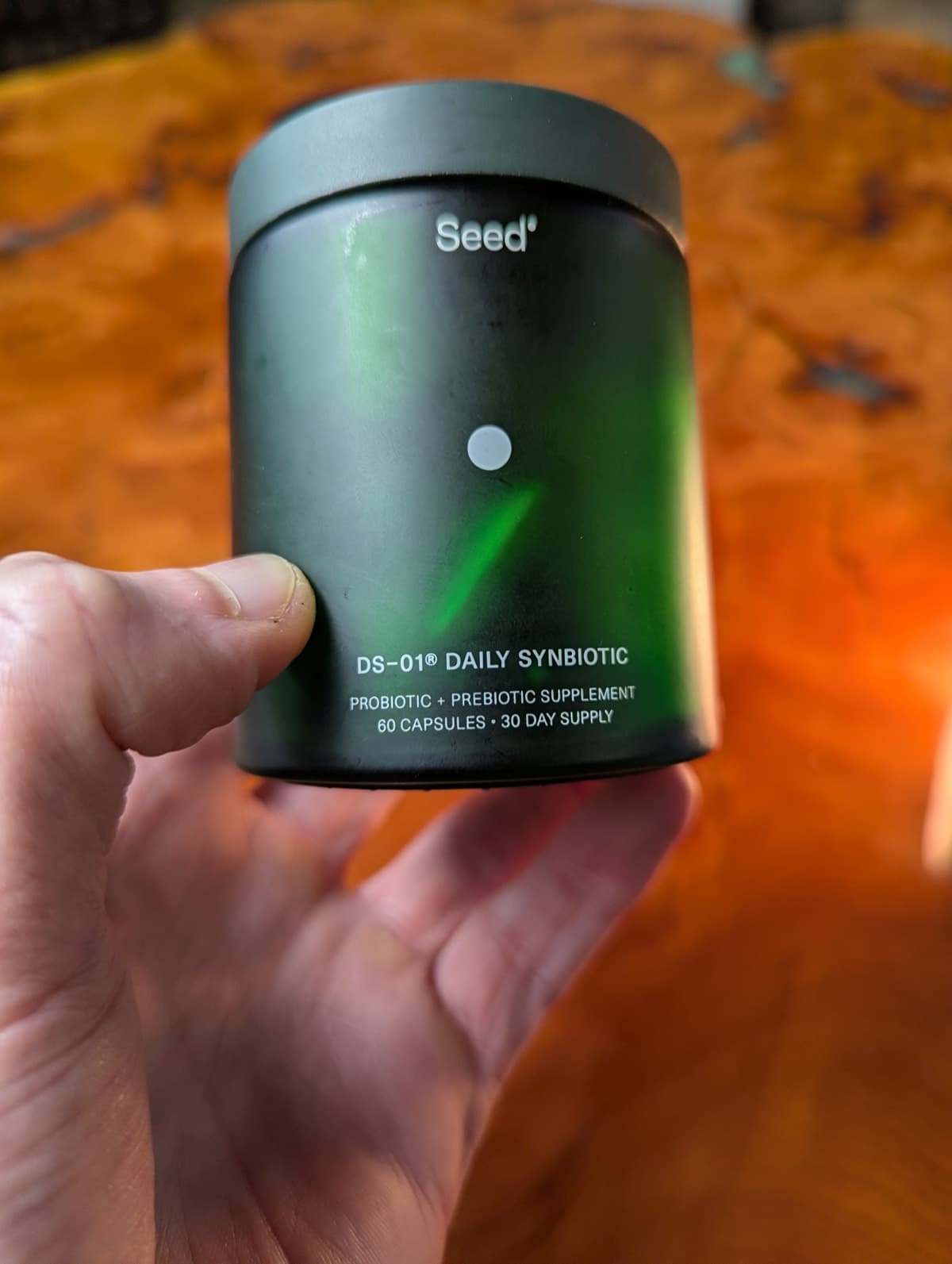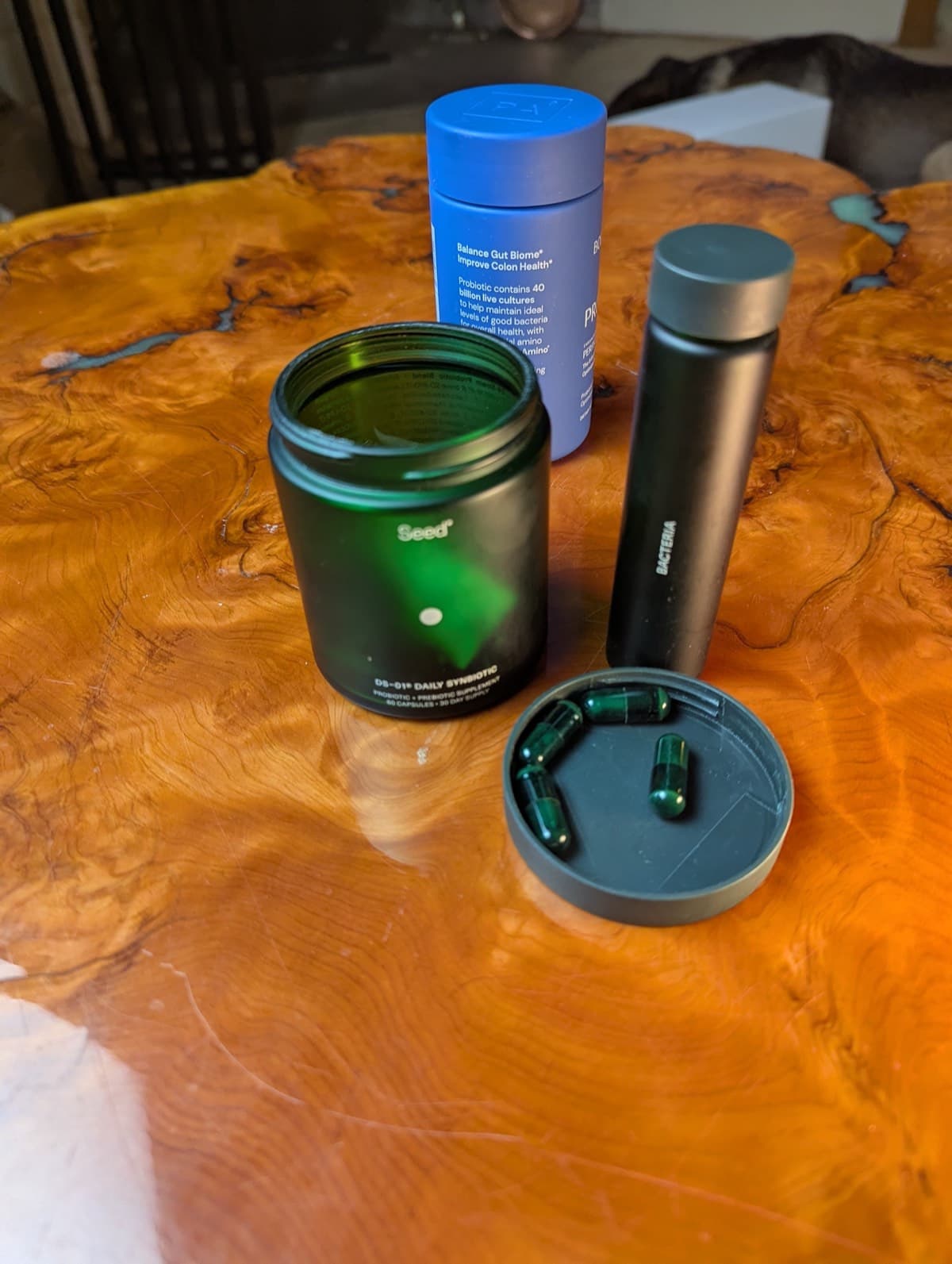
In my clinical practice, the debate of seed vs bioma comes up almost daily as patients look to optimize their gut health. As a licensed Registered Massage Therapist (RMT) and clinical researcher, I evaluate probiotic supplements based on hard scientific evidence and actual patient outcomes. When evaluating these two formulations, the choice is obvious. Seed DS-01 Daily Synbiotic delivers genuine, scientifically-backed systemic health benefits, while Bioma fails on transparency, clinical validation, and consumer safety.

What Problems Do Seed and Bioma Claim to Solve?
Patients often tell me they want a probiotic to fix specific issues like bloating, irregularity, or stubborn weight. Here is how these two products stack up against those clinical needs.
- Digestive Discomfort (Bloating, Irregularity): Seed DS-01 dominates this category. Its formula uses 24 clinically-studied strains and an advanced delivery system to repair gut barrier integrity. In my clinic, patients consistently report rapid improvements in bowel regularity and a sharp decrease in daily bloating. Bioma claims to offer similar relief, but its vague formulation makes these promises unreliable. Without exact strain designations, I cannot verify its efficacy for common gastrointestinal complaints.
- Weight Management: Bioma heavily markets itself as a weight loss tool. From a clinical standpoint, this is a massive red flag. There are zero product-specific clinical trials to back up these metabolic claims. Seed DS-01 focuses on systemic health and metabolic well-being without making speculative weight loss promises. It supports the body's natural baseline functions, which indirectly aids a healthy metabolism.
- Overall Health & Immunity: Seed DS-01 enhances gut barrier function and supports micronutrient synthesis using scientifically validated mechanisms. The gut-immune axis is a proven biological pathway, and Seed targets it directly. Bioma's impact on general immunity remains entirely speculative due to its unproven ingredient list.

Seed vs. Bioma: At a Glance
To cut through the marketing noise, let's look at the core specifications side-by-side. This table highlights the critical differences that inform my clinical recommendation.
| Feature | Seed DS-01 Daily Synbiotic | Bioma Probiotic |
|---|---|---|
| Primary Goal | Targeted gut & systemic health | Weight management & general digestion |
| Probiotics | 24 specific, named strains | 3 generic, unnamed species |
| Potency | 53.6 Billion AFU (Active Fluorescent Units) | Not listed on official site; inconsistent claims elsewhere |
| Delivery System | ViaCap® 2-in-1 capsule for targeted release | Standard delayed-release capsule |
| Product-Specific Clinical Trials | ✅ Yes (Completed & Ongoing) | ❌ No |
| Third-Party Testing | ✅ Yes (Extensive, transparent) | ❌ Claimed, but unverified |
| Corporate Transparency | ✅ Excellent (Clear US company) | ❌ Very Poor (Obscured, complex structure) |
| Counterfeit Risk | ✅ None (Controlled supply chain) | ❌ Extremely High (on marketplaces) |
| Get Best Deal on Seed | Visit Bioma Website |
Ingredient Deep Dive: A Scientific Breakdown
The clinical value of any probiotic depends entirely on its formulation. As a researcher, I constantly remind patients that benefits are tied to specific strains, not broad species categories. This is exactly where Seed separates itself from the pack.
- Probiotic Strains: Seed DS-01 contains 24 specific, alphanumeric-designated strains. Examples include Bifidobacterium longum SD-BB536-JP and Lacticaseibacillus rhamnosus SD-GG-BE. This precision allows me to trace the ingredients directly to published clinical trials. Bioma lists only three generic species: Bifidobacterium lactis, Bifidobacterium longum, and Bifidobacterium breve. Without specific strain codes, verifying their scientific claims is impossible.
- Key Strain Evidence (Seed): Seed's strains are chosen for their documented biological effects. For instance, B. longum BB536 is clinically studied for gut colonization and anti-inflammatory properties. L. rhamnosus GG has extensive evidence supporting gastrointestinal health and immunity. This scientific backing provides absolute confidence in its mechanism of action.
- Prebiotic Component: Seed DS-01 uses a non-fermenting polyphenolic prebiotic derived from Indian Pomegranate (MAPP). This selectively nourishes the probiotic strains without triggering the gas and bloating caused by standard prebiotic fibers. Bioma includes Xylooligosaccharides (XOS). While XOS is a known prebiotic, its specific dose and interaction within Bioma's unverified formula remain completely untested.
- Delivery System: Seed DS-01 utilizes the proprietary ViaCap® 2-in-1 Capsule. This capsule-in-capsule engineering protects live probiotics from harsh stomach acid, ensuring they reach the colon viable and active. Bioma relies on a standard delayed-release capsule. It offers basic protection but falls far short of Seed's targeted delivery mechanism.
Deep Dive: Seed DS-01 Daily Synbiotic

Seed DS-01 is a synbiotic engineered with absolute scientific precision. It combines 24 clinically-validated probiotic strains with a novel, non-fermenting prebiotic. The ViaCap® Delivery Technology is the standout feature here. It shields the live bacteria from stomach acid so they arrive alive in the lower intestine.
What I appreciate about Seed DS-01: The 24 specific strains deliver 53.6 Billion AFU (Active Fluorescent Units) chosen for documented benefits across digestive, immune, and dermatological health. I regularly observe patients experiencing reduced bloating and a noticeable boost in daily energy. The unique prebiotic fuels the bacteria without causing the digestive distress common with cheaper fibers. This ensures high patient compliance, especially for those with sensitive stomachs.
Seed also invests heavily in clinical trials on the final DS-01 product. They have proven its ability to increase beneficial compounds like Butyrate and Urolithin A. Extensive third-party testing for purity, potency, and contaminants provides a level of clinical assurance rarely seen in the supplement industry.

User Experience & Company Ethos: Seed ships a thoughtful welcome kit featuring a refillable glass jar and a glass travel vial to protect the capsules from light and moisture. Subsequent months arrive in minimalist, compostable pouches. This refill system drastically cuts down on plastic waste. Seed also operates SeedLabs, an ecological research division developing bacterial applications to solve environmental problems.
Deep Dive: Investigating the Bioma Formula
Bioma markets itself as a "3-in-1" synbiotic containing probiotics, prebiotics, and postbiotics. However, my clinical evaluation of its formulation reveals several alarming red flags.
What concerns me about Bioma: Listing generic species without specific strain codes is a fundamental breach of scientific transparency. The official website completely omits any stated potency (CFU or AFU). Without this data, patients have no way of knowing if they are receiving a therapeutic dose.
Bioma relies entirely on borrowed science. They reference general benefits of probiotic species rather than providing clinical evidence for their specific final product. The brand is also linked to a confusing web of international companies, shielding the operators from basic accountability. Because it is widely sold on open marketplaces like eBay and Walmart, patients face a severe risk of buying counterfeit, potentially dangerous products.
Cost vs. Value: A Deeper Analysis
Looking past the daily price tag reveals exactly what you are paying for.
- The Value of Seed: Seed's premium price reflects a massive investment in scientific integrity. This cost covers ongoing clinical research, extensive third-party testing for over 500 contaminants, and the proprietary ViaCap® technology. You are paying for a controlled, counterfeit-proof supply chain and verifiable clinical outcomes.
- The Risk-Adjusted Cost of Bioma: Bioma's variable pricing reflects a flawed business model. The apparent value vanishes when you realize there is zero investment in clinical trials and unverified third-party testing. You are gambling your money on a product that offers no guaranteed ingredient identity or potency.
Timeline for Benefits: Managing Expectations
Understanding the timeline for gut adaptation is critical for patient success.
- Seed: A Phased Approach: Seed is highly transparent about the adaptation phase. Some patients experience mild gas in the first few days as their microbiome shifts. By weeks one and two, patients report improved regularity and easier bowel movements. By weeks three and four, bloating significantly decreases. After two months, systemic benefits like improved skin health and metabolic function become obvious.
- Bioma: An Unpredictable Outcome: Because Bioma lacks clinical trials on its final formula, establishing a timeline for benefits is impossible. Any reported effects rely on anecdotal testimonials or the placebo effect. Without verifiable potency, any expected timeline is pure guesswork.
Who It's Best For: My Final Verdict
The choice between Seed and Bioma comes down to scientific certainty versus a marketing gamble.
- Choose Seed if... You value transparency, clinical evidence, and rigorous quality assurance. If your goal is to genuinely repair your digestive and systemic health with a proven formulation, Seed is the only logical choice. Be sure to read the seed probiotics review 2026 to see real clinical outcomes from verified users.
- Avoid Bioma if... You require proven ingredients, verifiable potency, and guaranteed authenticity. The severe risks tied to its lack of transparency and uncontrolled supply chain make it a product I actively advise my patients to avoid.
Your Probiotic Checklist: An Empowering Buyer's Guide
Use these clinical guidelines when evaluating any probiotic supplement to protect your health.
- Does it list specific strains? Look for specific alphanumeric strain codes (e.g., Lactobacillus rhamnosus GG), not just the broad species name.
- Is there clinical evidence on the final product? Demand clinical evidence on the final product rather than borrowed science.
- Is the potency clear and guaranteed? Ensure the label clearly states the potency in CFU or AFU and guarantees it through the expiration date.
- Is the company transparent? Verify the company provides transparent third-party testing for purity and contaminants.
Invest in your health with a formulation built on rigorous science. Avoid the clinical risks of unproven marketing claims.
Choose Science: Get the Best Deal on Seed
Related Clinical Resources
- Recommended Guide: Read my full, hands-on review of the probiotics that actually work for deeper clinical insights.
- Related Review: Check out my comparative analysis on the Seed Vs Florastor.