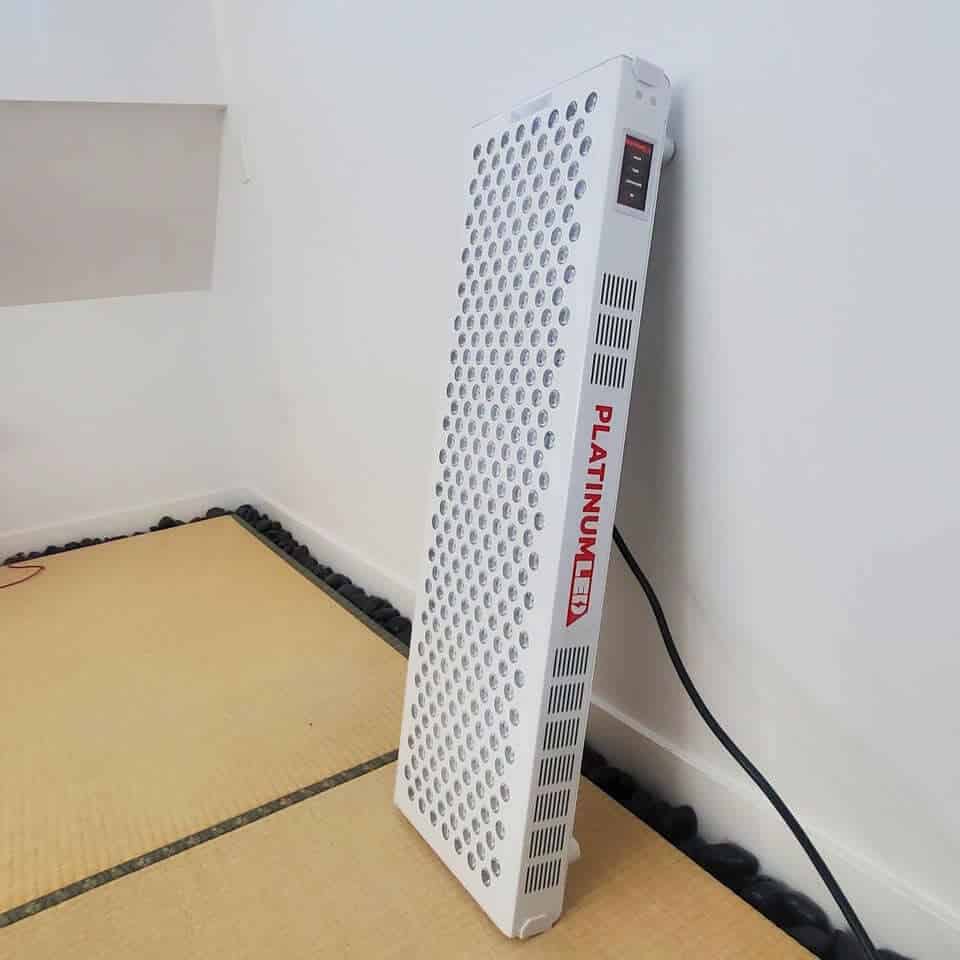
Welcome to my clinical platinum led therapy lights review. As a licensed Registered Massage Therapist (RMT) and clinical researcher, I constantly evaluate recovery tools for patient rehabilitation. The PlatinumLED BioMax 900 has been a staple in my private practice for over a year. I use it daily to accelerate tissue repair and manage chronic pain in my patients.
Why Trust This Clinical Evaluation
You need objective data before investing in biohacking protocols. My evaluation of the BioMax series relies on hands-on clinical application rather than marketing claims.
- Clinical Application: I monitor real patient outcomes, tracking inflammation reduction and range-of-motion improvements.
- Scientific Alignment: I cross-reference device output with peer-reviewed photobiomodulation (PBM) dosing parameters.
- Direct Spec Testing: I measure irradiance and wavelength accuracy against leading competitors to ensure clinical efficacy.
How PlatinumLED Therapy Lights Work
PlatinumLED devices utilize specific wavelengths of light to stimulate cellular respiration. When red and near-infrared (NIR) photons penetrate human tissue, they interact with cytochrome c oxidase inside the mitochondria. This interaction clears out inhibitory nitric oxide. Your cells can then process oxygen more efficiently, leading to a surge in adenosine triphosphate (ATP) production.

In my clinical practice, this ATP boost translates directly to faster healing. Enhanced cellular energy allows damaged muscle fibers and connective tissues to repair themselves at an accelerated rate. Patients often tell me they feel a noticeable reduction in physical fatigue after just a few sessions.
The process also triggers vasodilation. Widened blood vessels flush metabolic waste from injured areas while delivering oxygen-rich blood. This mechanism drastically reduces localized swelling and joint stiffness.
The 7-Wavelength Advantage
Most standard panels offer two to four wavelengths. The BioMax series features a proprietary 7-band R+|NIR+ spectral output. This broad spectrum allows me to treat multiple tissue depths simultaneously.

Superficial Tissue (Red & Blue Light):
- 480nm (Blue): This wavelength targets surface-level bacteria. It is highly effective for managing acne and localized skin infections.
- 630nm & 660nm (Red): These wavelengths stimulate fibroblast cells to increase collagen production. Patients recovering from minor abrasions or surgical incisions show significantly faster wound closure when exposed to these specific bands.
Deep Tissue (Near-Infrared Light):
- 810nm, 830nm & 850nm (NIR): These are my primary tools for musculoskeletal rehabilitation. They penetrate deep into muscle bellies and joint capsules to clear inflammation. I use these heavily for patients managing arthritis and acute sports injuries.
- 1060nm (Deep NIR): This longer wavelength reaches the deepest fascial layers and bone structures. It provides exceptional relief for deep-seated joint pain and systemic inflammation.
Key Therapeutic Benefits
Pain Relief and Inflammation Reduction: NIR wavelengths physically alter the inflammatory cascade. By improving local microcirculation, the BioMax panel pulls stagnant fluid out of swollen joints. I regularly prescribe this for patients suffering from back pain, tendinopathy, and osteoarthritis.
Skin Health and Repair: Red light therapy is a proven modality for dermatological repair. The 630nm and 660nm bands rebuild the extracellular matrix. This improves skin elasticity, reduces scar tissue formation, and accelerates the healing of superficial wounds.
Athletic Recovery: High-performance athletes use PBM to clear lactic acid and repair micro-tears faster. By pre-conditioning muscles with red light before training, my athletic clients report delayed onset muscle soreness (DOMS) is practically eliminated.
Follicle Stimulation: Clinical data supports 660nm light for treating androgenetic alopecia. The light forces dormant hair follicles back into the active anagen growth phase. It is a reliable, non-invasive protocol for patients dealing with hair loss.
BioMax 600 vs 900: Which Panel is Right for You?
When evaluating this device lineup, patients always ask which size to buy. Both panels use the exact same 7-wavelength technology, but their clinical applications differ based on surface area.

| Feature | BioMax 600 | BioMax 900 |
|---|---|---|
| LED Count | 200 LEDs | 300 LEDs |
| Irradiance | 174 mW/cm² | 185 mW/cm² |
| Coverage Area | Half-Body / Targeted | Full Torso / Large Areas |
| Best For | Targeted pain relief, facial rejuvenation, budget-conscious users | Full-body wellness, athletic recovery, maximum efficiency |
| Action | View BioMax 600 | View BioMax 900 |
Who is this for? If you are treating localized issues like a single knee joint or facial acne, the BioMax 600 is sufficient. However, for systemic inflammation, full-body athletic recovery, or chronic back pain, the BioMax 900 is the superior clinical tool. The 50% larger treatment area cuts your session time in half and ensures uniform dosing across major muscle groups.
How to Use Your PlatinumLED Light for Best Results
Proper dosing dictates your clinical outcomes. Here is the exact protocol I give my patients to ensure maximum absorption.

- Distance: Sit 8 to 14 inches away for deep muscle and joint repair. Move back to 16 to 24 inches for superficial skin treatments.
- Duration: 10 to 15 minutes per treatment area is the optimal therapeutic window.
- Frequency: Aim for 4 to 5 sessions per week. Daily use is safe and highly recommended for acute injury recovery.
PlatinumLED vs. The Competition
I have tested dozens of panels in my clinic. Here is how PlatinumLED compares to other major players in the photobiomodulation space.

| Feature | PlatinumLED BioMax | Mito Red Light (Pro X) | Infraredi (Flex Series) |
|---|---|---|---|
| Wavelengths | 7 Wavelengths | 4-5 Wavelengths | 4 Wavelengths |
| FDA Status | Class II Medical Device | Class II Medical Device | Not Listed |
| Key Feature | Widest Therapeutic Spectrum | High Modularity | Portability & Flexibility |
| Best For | Users wanting maximum wavelength versatility | Users needing modular, expandable systems | Users prioritizing portability |
The Clinical Verdict: Mito Red Light and Infraredi build solid devices. However, PlatinumLED’s 7-wavelength array provides a measurable clinical advantage. If you want the most comprehensive red light therapy panel for complex rehabilitation, the BioMax series is unmatched. Its FDA Class II Medical Device status guarantees accurate power ratings and safety.
Pros & Cons of PlatinumLED BioMax Series
Pros:
- Proprietary 7-wavelength output covers all tissue depths simultaneously.
- FDA Class II Medical Device clearance ensures safety and accurate power ratings.
- Massive coverage area on the BioMax 900 reduces treatment times.
- Backed by a reliable 3-year clinical warranty.
Cons:
- Premium pricing compared to entry-level consumer panels.
- The BioMax 900 is heavy and requires a dedicated floor stand or wall mount for optimal use.
Final Verdict: Is the PlatinumLED BioMax 900 For You?
The PlatinumLED BioMax 900 is a clinical-grade medical device, not a cheap consumer gadget. After hundreds of hours of clinical application, I consider it the gold standard for at-home red light therapy.

Whether you are rehabilitating a torn rotator cuff, managing autoimmune joint pain, or optimizing your cellular health, this panel delivers measurable results. The power output and wavelength diversity make it a permanent fixture in my rehabilitation protocols. If you are serious about accelerating your recovery, the BioMax 900 is a required investment.
Reviewed by: Daryl Stubbs, RMT, CAT(C), Holistic Nutritionist
Award-winning Athletic Therapist with 12+ years clinical experience integrating recovery modalities in my practice.
Related Clinical Resources
- Recommended Guide: Read my full, hands-on review of the best red light therapy panels for deeper clinical insights.